


Instawork: Be your own boss
4.417.03K Reviews
App Specs
- Version
- 2.241.1
- Updated On
- License
- Free
- Downloads
- 1,000,000+
- Developer
- Instawork
- Categories
- Business
- Platform
- Android, iOS
Screenshots
 Analysis by AppCompare
I find the most useful way to think about Instawork is as a tool for matching your available time with nearby shifts, rather than as a replacement for a conventional job search. That distinction matters: a short shift can fill a gap in a week, while a run of temporary work may suit someone seeking a more flexible routine. Instawork: Be your own boss is a free business app from Instawork, and its central appeal is the chance to look for work that lasts from a few hours to a few months. The flexibility is real, but it works best when you treat each opportunity as a commitment to assess carefully, not as guaranteed income.
Flexibility is the main feature, not a promise of steady work
In my view, the app’s most important capability is letting workers look for shifts and gigs that can fit around other responsibilities. That can be valuable if you have classes, caregiving duties, another job, or simply want to avoid committing to one fixed schedule. Instead of beginning with a search for a permanent position, you can start with the time you have available and see whether a suitable opportunity appears nearby.
That difference also sets expectations. A flexible marketplace can offer options, but it cannot make every week equally predictable. I would use Instawork to explore work and build a changing schedule, while keeping a separate plan for essential bills if dependable hours are a priority. Someone who needs a guaranteed number of shifts may be better served by a regular part-time role or a staffing arrangement that clearly commits to recurring hours.
How I would use it before accepting a shift
After setting up a profile, I would narrow the search by location and type of work, then compare the available details rather than tapping the first appealing option. The practical question is not just whether a shift fits on the calendar: it is whether the travel time, the work itself, and the stated pay make sense together. A job that looks convenient at a glance may be less attractive once you account for getting there and back.
I would also keep my availability realistic. Marking time as open when I might need it for another commitment can lead to awkward decisions later, especially when a short-notice opportunity appears. A useful habit is to check the app when I know my upcoming schedule, then make a deliberate choice about which days I can genuinely work. That turns flexibility into a plan instead of a stream of last-minute distractions.
A realistic fit for a changing week
Imagine a student with classes on weekdays who has a free Saturday and wants to earn extra money without agreeing to recurring weekend hours. They can look for nearby work that fits that day, weigh the commute against the shift, and decide whether the commitment is worthwhile. The same approach could help someone between jobs cover a few open days while continuing to pursue longer-term work.
The app’s range of short gigs and longer temporary jobs gives it more than one possible role in a work routine. A brief shift might be useful as a one-off, while a longer placement may provide more continuity for a limited period. I would still read each opportunity on its own terms: “flexible” does not mean every job has the same duration, expectations, or suitability for every worker.
Worth Reading Before You Choose

EA SPORTS FC Mobile 26 Is a Bigger Football Game, but It Takes Time

Flipboard Shows What News Apps Must Do Beyond the Feed

Switching to Android Auto Means Rethinking Your Driving Routine

Google Calendar Makes a Crowded Week Easier to Manage

Ludo King Makes the Most of the Minutes Between Plans

Baby Panda World Brings Quick Play to Modern Phones, but Its Game Library Feels Busy
Where a gig app differs from ordinary job hunting
Compared with a general job board, Instawork is more focused on finding temporary shifts and local gig work than on browsing a broad mix of permanent career openings. That focus can save time when you specifically want short-term work. A traditional job site is a better fit if you are looking for a salaried role, a defined promotion path, or a position whose main value is long-term stability.
It also differs from asking friends or local businesses directly. Direct contact can be useful when you already know an employer or want to negotiate a recurring arrangement, whereas an app can make it easier to scan opportunities in one place. I would use the two approaches for different purposes: the app to discover available shifts, and direct conversations when I need clarity about a continuing schedule or a particular workplace.
Trade-offs worth considering
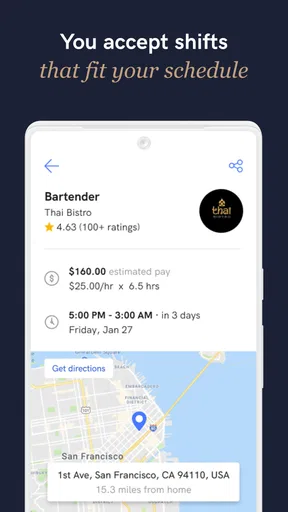
Flexible work puts more responsibility on the worker to judge whether each opportunity is practical. The location filter can help, but nearby does not always mean easy to reach at the required time. Before accepting, I would check the address and think through transport, start time, and how much of the day the shift will actually occupy. That simple check can prevent a promising listing from becoming an inconvenient commitment.
There is also a trade-off between choice and continuity. Selecting individual shifts gives you room to adapt, but it may require more frequent searching and planning than a stable rota. If your budget depends on a predictable weekly amount, I would not assume that an app-based search alone will provide it. If, instead, you value control over which opportunities to consider, the extra decision-making may feel like a fair price for flexibility.
Who is most likely to benefit
I think Instawork is most useful for people who can take temporary work on changing days and are comfortable evaluating opportunities one by one. It may suit someone seeking supplemental income, a person with an irregular schedule, or a worker who wants to explore different kinds of local jobs before settling into a longer-term path. The key is having enough freedom to choose carefully rather than needing every available shift.
I would hesitate to recommend it as someone’s only plan if they need a guaranteed schedule, a specific career ladder, or a role that can be done remotely. It is also a poor match if travel makes local shifts impractical or if you cannot adjust your availability when opportunities arise. In those cases, a conventional part-time job, a remote-work board, or direct outreach to employers may align better with what you need.
Getting Started with Instawork
First things first, downloading Instawork is a breeze. Available on both Android and iOS, the app is lightweight and installs quickly. Once you’re in, setting up your profile is straightforward. You’re asked to fill in some basic details, upload a photo, and voilà—you’re ready to explore the world of flexible work.
The app’s interface is clean and user-friendly. I didn’t find myself lost in a maze of menus or overwhelmed by options. Everything you need is at your fingertips. You can easily navigate through different job categories, which is great because who wants to spend more time searching for work than actually working?
Finding Jobs That Fit Your Lifestyle
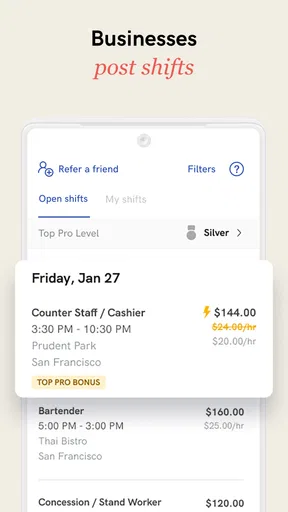
Now, onto the juicy part—finding gigs. Instawork connects you with local businesses looking for temporary staff. This means you can pick up shifts at restaurants, warehouses, or even events. The variety is impressive. Plus, you get to be your own boss, choosing when and where you want to work.
One feature I absolutely love is the ability to filter jobs by location, pay rate, and even the type of work. Having this control makes it easier to find what suits you best. For someone like me who values flexibility, this app is a godsend.
Experience the App in Action
After setting up my profile, I decided to test the waters with a weekend gig at a local event. The booking process was simple; I just selected the job, confirmed my availability, and received a confirmation almost instantly. The app sends notifications to keep you updated, which means you’re never left wondering about the status of your application.
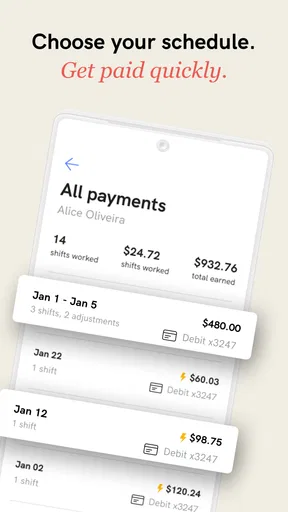
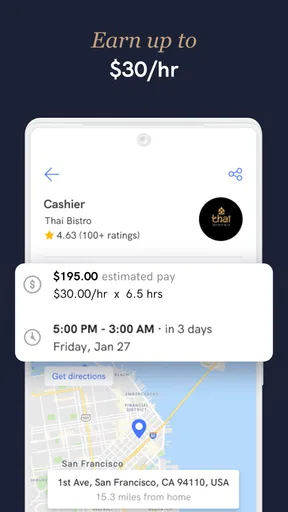
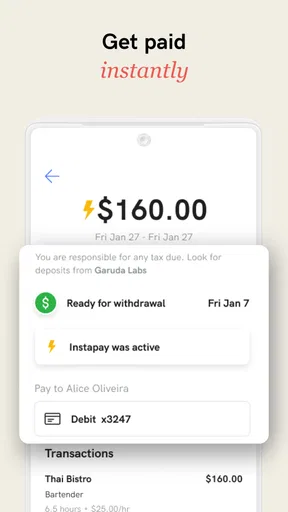
On the day of the event, I used the in-app map to find my way. Everything went smoothly, and I even met some great people. Payment was prompt, and I could track my earnings within the app itself. The sense of autonomy and the ability to earn on my terms? Priceless.
Security and Support
One thing that sets Instawork apart is its focus on security and support. As someone new to gig work, I had my hesitations. But the app provides a secure environment where your data is protected. Plus, there’s a support team ready to assist if you run into any snags.
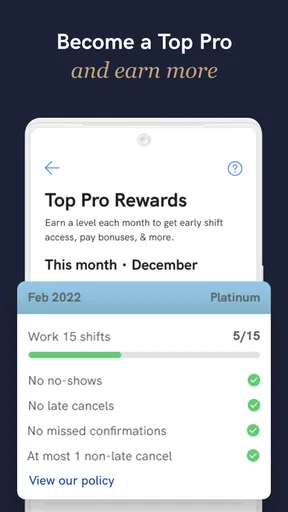
There’s also a system in place for feedback and ratings. This means you can build a reputation as a reliable worker, which can open up more opportunities down the line.
Final Thoughts
In a world where flexibility is becoming increasingly important, Instawork: Be your own boss stands out as a solid option for people looking to take control of their work-life balance. It’s easy to use, offers a diverse range of job opportunities, and provides the kind of freedom that traditional jobs just can’t match.
If you’re tired of the daily grind and want to explore a new way of working, give Instawork a try. Who knows? You might just find that being your own boss is exactly what you’ve been missing.
What to know before relying on it
The app is free and intended for everyone, which makes trying it out an accessible first step; the choice to accept work still deserves the same care as any other job decision. I would review the shift details before committing, keep a record of the schedule I agreed to, and make sure I understand what the work involves. A clear personal routine matters more than checking constantly for new openings.
Instawork has a 4.4 average from around 44,000 ratings, and more than a million installs. Those figures suggest that many people have tried it, but they cannot tell me whether the available work in my own area will match my needs. I would judge the app by the opportunities I can actually reach and the clarity of each listing, not by popularity alone. The current version is 2.240.0, and the app has been available since July 5, 2016.
Planning around notifications and real-world details
Notifications can be handy when a decision or update is time-sensitive, but I would avoid treating every alert as an instruction to accept immediately. A better workflow is to check the details, compare them with my calendar, and respond only when the shift is genuinely workable. That pause is especially useful if I have another job or family responsibilities, because accepting first and sorting out conflicts later undermines the flexibility the app is meant to offer.
I would also think beyond the shift itself. For event work, for example, the start time, expected finish, route home, and any clothing or preparation needs can affect whether the opportunity is worthwhile. For warehouse or restaurant work, I would make sure the job description matches the kind of tasks I am prepared to do. These checks are not a special trick; they are how I would turn a quick in-app choice into a sound decision.
Choosing between a shift, a longer role, and another route
If my main goal were to test a new work setting, a temporary opportunity could be a practical way to learn what suits me without treating it as a permanent career move. If I wanted a reliable weekly routine, though, I would compare the app with local employers’ own hiring pages and conventional part-time listings. Those routes may take more effort to search, but they can be clearer matches for people who prioritize recurring hours or a specific long-term role.
For someone who already has a stable job, Instawork may be most useful as an occasional supplement, provided the extra work does not create exhaustion or clash with the main schedule. For someone between roles, it can help occupy available time while they continue a broader search. In either case, I would decide in advance how much time and energy I can spare, rather than letting the existence of another possible shift set the pace of my week.
A sensible first try
My practical recommendation is to start with a shift that is easy to get to and fits comfortably around existing commitments. Use the filters to narrow the search, read the details closely, and give yourself enough time to arrive without rushing. Afterward, reflect on whether the work, travel, and timing were a good match; that experience can guide what you look for next. A small, low-pressure first step is more useful than accepting an appealing listing before checking the whole picture.
Instawork is best understood as one option in a flexible-work toolkit: helpful for discovering nearby temporary opportunities, but not a substitute for a guaranteed schedule or a carefully chosen career position. If that distinction fits what you need, it is worth exploring. If stability matters more than choice, I would start with employers and job listings built around ongoing hours instead.
Pros
- Flexible work schedule options.
- Wide range of job categories.
- User-friendly interface design.
- Real-time job notifications.
- Opportunity to gain diverse experiences.
Cons
- Limited availability in some regions.
- Occasional app performance glitches.
- Inconsistent communication with employers.
- Compensation varies by job type.
- High demand jobs fill up quickly.
FAQs for Instawork: Be your own boss
What is Instawork and how does it work?
Instawork is a platform that connects businesses with local professionals for flexible work opportunities in various industries. Users can sign up, create a profile, and start finding gigs that fit their schedule. The app allows for both part-time and full-time work, giving users the freedom to choose when and where they want to work.
Is Instawork available in my area?
Instawork is currently expanding its services across the United States. To check availability, download the app and enter your location during the sign-up process. The app will inform you if there are job opportunities in your area and notify you of any upcoming expansions to new regions.
How do I get paid through Instawork?
Instawork offers a seamless payment process. Once you complete a job, your earnings are processed and deposited directly into your bank account. You can expect to receive payments within a few days after completing a gig. Make sure your bank details are updated in the app to avoid any delays.
What types of jobs can I find on Instawork?
Instawork primarily caters to industries such as hospitality, event staffing, and warehousing. Jobs range from bartending and serving to warehouse operations and deliveries. The app continues to add new job categories, so users have a growing selection of opportunities to choose from based on their skills and interests.
Are there any fees for using Instawork?
Instawork is free for workers to download and use. There are no subscription fees or hidden costs involved. The app earns revenue through partnerships with businesses that post job opportunities. This allows workers to explore and accept gigs without worrying about any financial commitments.


